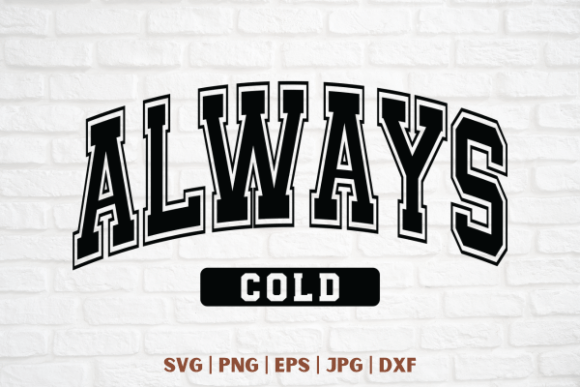
Always Cold: An Embroidery Designer's Hands-On Review
When I see a design called Always Cold, my mind immediately goes to potential projects. This isn’t just a graphic; it’s a statement that feels ready to become a tactile, stitched piece. Before loading any file into my machine, I always evaluate a design through the lens of real-world embroidery. How will it stitch out? On what product will it resonate? Let’s walk through what I see when I look at this design for practical use.
The Immediate Mood and Visual Personality
The first impression of Always Cold is one of playful, self-aware humor. It’s a relatable phrase with a lot of personality. The composition, based on the workspace info, suggests it’s a clean, likely text-based or icon-driven graphic created at 300 DPI on a 1000 x 1000 canvas. That’s a great starting point for an embroidery file. The high resolution means scaling for different hoop sizes should retain clarity, which is crucial when translating a digital image into physical stitches.
The mood it creates is lighthearted and conversational. This isn’t a formal logo; it’s a design meant for connection. I imagine it on a cozy garment or a useful everyday item, turning a simple phrase into a shared chuckle or a personal affirmation. Its visual personality feels modern and straightforward, which makes it highly adaptable for a craft business or a personalized gift.
Where Always Cold Belongs: Real Project Scenarios
I’m picturing a specific scenario right now: a client requests a custom embroidered tote bag for a friend who is notoriously chilly. Always Cold is a perfect candidate. The design would sit nicely on the flat panel of a canvas tote, its clean lines stitching out clearly. For sweatshirt embroidery, it’s an ideal choice for the left chest or the center back of a hoodie. The phrase complements the garment’s purpose—something you wear when you’re, well, always cold.
Beyond apparel, this design shines for small shop product lines. Think kitchen towels for someone who complains about a drafty kitchen, aprons for a baker who keeps the AC high, or pillow covers for a cozy reading nook. It has strong potential for baby embroidery on a onesie or blanket, playing on the idea of a little one needing extra layers. As a embroidered patch, it could be applied to a backpack or a jacket, offering a ready-made finished product for Etsy sellers.
Because it’s provided in multiple formats including SVG, PNG, and DXF, its utility extends beyond the hoop. These files are excellent for creating printable mockups for your online listings, or for integrating into other digital product assets. For the apparel decorator, having an EPS or SVG file means you can easily adjust colors or combine it with other elements in your design software before creating the final machine embroidery design.
Practical Considerations for Stitching Success
Now, for the hands-on part. How does Always Cold perform when the needle meets the fabric? The key here will be stitch density and detail level. With a design that likely features text or clean shapes, you’ll want to consider the stitch type. Is it best rendered with a bold satin stitch for a smooth finish, or a fill stitch for a more solid area? Without exact stitch counts provided in the description, my standard practice applies: I always test the design on scrap fabric first.
This test run is non-negotiable. It lets you check thread color contrast, review how small details like lettering corners stitch out, and confirm the optimal hoop size. For a 1000 x 1000 workspace design, you’ll need to scale it appropriately in your software to fit your project. A common pitfall is assuming a design will work on a small cap hoop without checking—tiny, intricate details can become muddy or break if the stitches are too dense.
Fabric and Project Fit: Where to Use with Care
This design, given its likely clean aesthetic, will perform beautifully on stable, medium-weight fabrics like cotton for tote bags, fleece for sweatshirts, or linen for tea towels. However, use it carefully on very textured fabrics like some knits, as fine details might get lost. On thin fabric or stretchy fabric, you must use a proper stabilizer to prevent puckering and distortion.
For dark fabric, your thread color choice becomes paramount. A test stitch-out on a dark scrap will show if you need a brighter top thread or perhaps a lighter backing to ensure the design pops. Applying it on curved surfaces like caps requires extra stabilization and potentially adjusting the design orientation so it sits correctly on the curved panel. Also, consider products that need frequent washing; a well-stabilized, properly stitched design on a garment like a t-shirt will hold up better if the density isn’t overly high, which can make the fabric stiff and prone to stress.
Why This Design Adds Value to Your Work
From a business and creative perspective, Always Cold adds value. Its relatable theme boosts customer engagement. When someone sees it on a handmade product, it creates an instant connection. That increases the perceived value and giftability of the item. For creative entrepreneurs, using such a design consistently across a product line—say, on towels, aprons, and sweatshirts—can build subtle brand consistency around a theme of comfort and humor.
It also aids in professionalism. A clean, well-stitched version of this design on your product photographs speaks to quality. It tells buyers you’ve taken care in execution, building customer trust. For commercial embroidery projects, a design like this could be perfect for a boutique’s branded staff apparel or as a seasonal gift for clients.
Essential Designer Notes Before You Stitch
Before you commit this design to a final project, here are my practical notes:
- Always test on scrap fabric that matches your final project’s weight and texture.
- Check the provided files in your software. Scale the design to your desired size and inspect the small details in the preview.
- Compare light and dark fabric backgrounds in your planning. Create simple black and white mockups to visualize the final look.
- Confirm the licensing terms for this digital clipart before selling finished items or using it in commercial projects. The product description doesn’t specify this, so it’s a critical step to verify.
- Remember, the included file formats are fantastic design assets, but the embroidery-specific parameters like exact stitch count or machine compatibility aren’t listed. Your embroidery software will generate those when you convert or use the appropriate file. Start with a small, safe test run.
In essence, Always Cold is more than a digital clipart file. It’s a design with strong potential to become a charming, well-loved embroidery project. Its simplicity is its strength, making it adaptable across a wide range of products for makers, hobbyists, and small business owners. By approaching it with these practical considerations, you can ensure it stitches out beautifully, adding a touch of personality and quality to everything you create.